
The Canopy: Reading Knowledge
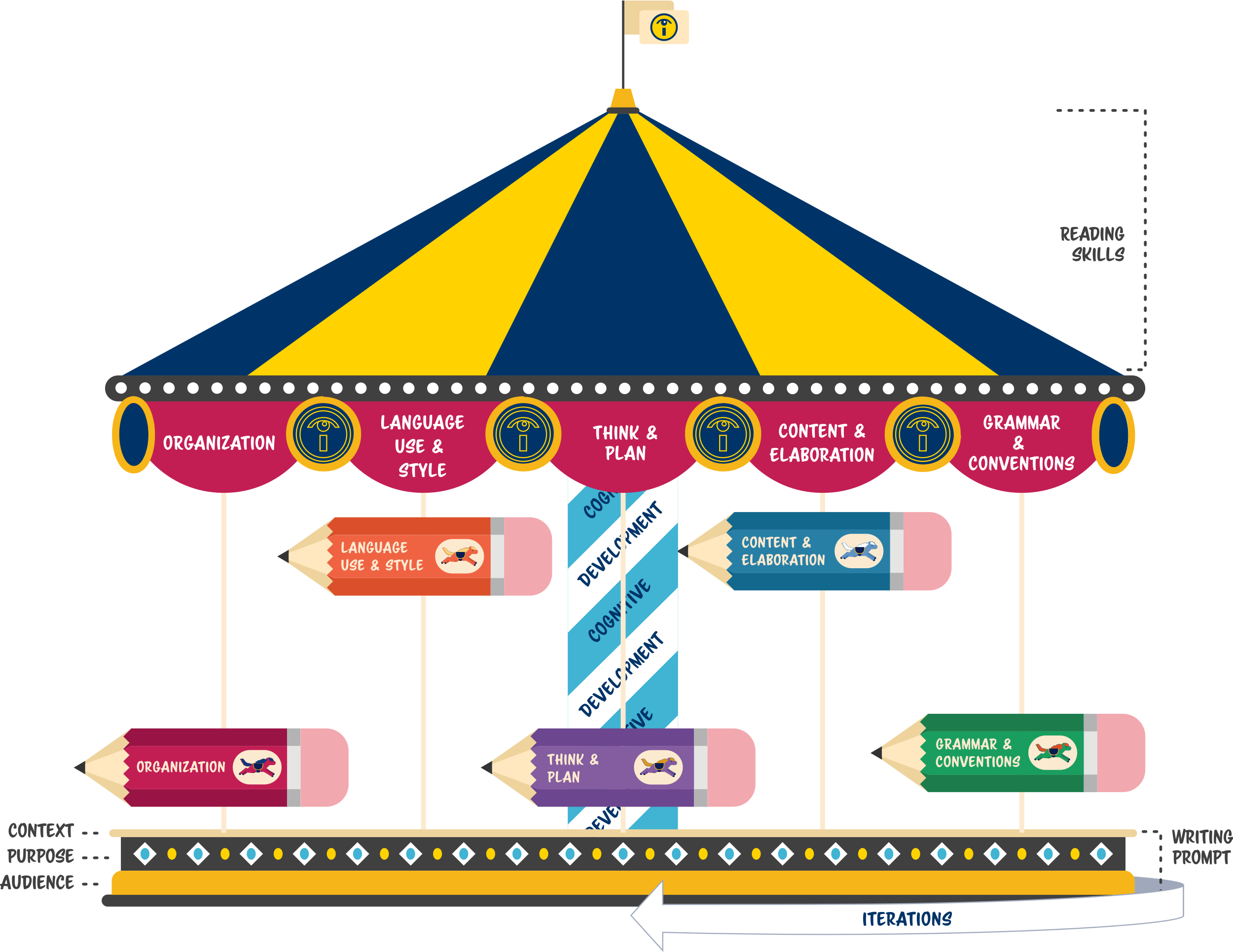
Above the carousel, the canopy represents reading and background knowledge, the rich store of vocabulary, comprehension, and text structures that guide a writer’s choices. Because reading and writing are reciprocal, what students read directly expands what they can write.
The Poles: Oral Language
The vertical poles connecting the canopy to the platform symbolize oral language—the foundation of literacy. Spoken language connects reading and writing, grounding students in the ability to express and organize thought before encoding it in print.
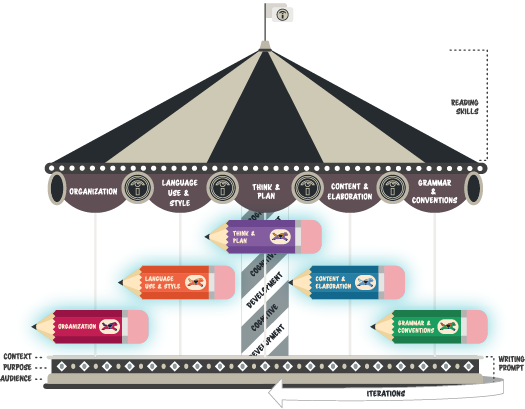
The Riding Stations: Five Domains of the Writing Rope
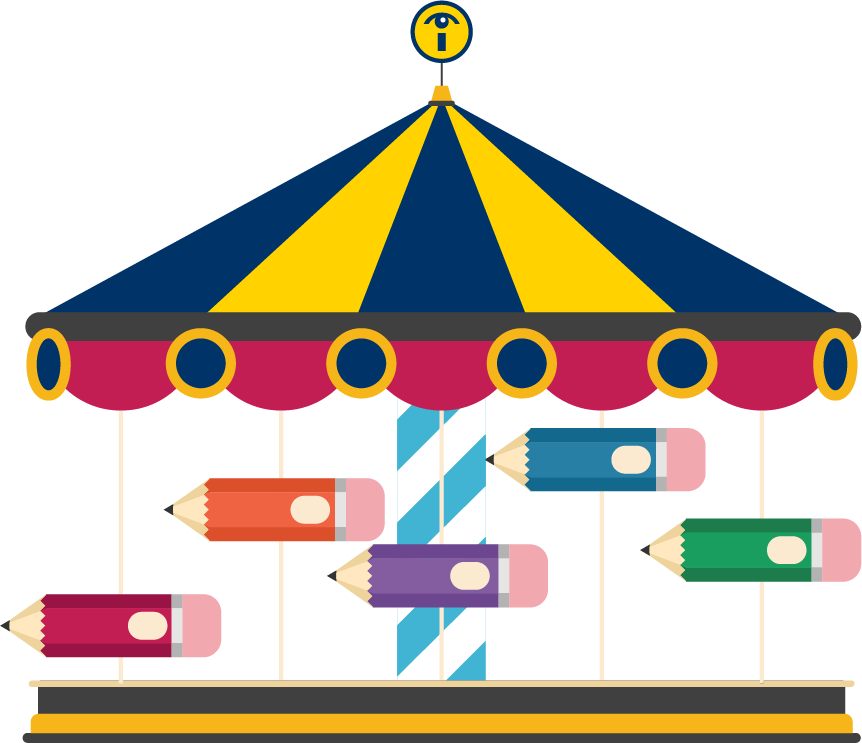
Many of us picture the heart of a carousel as the beautiful horses we ride as we go around. In the Writing Carousel, the horses are pencils. Each pencil represents a writing domain, and every rotation offers another opportunity for reflection, revision, and growth.
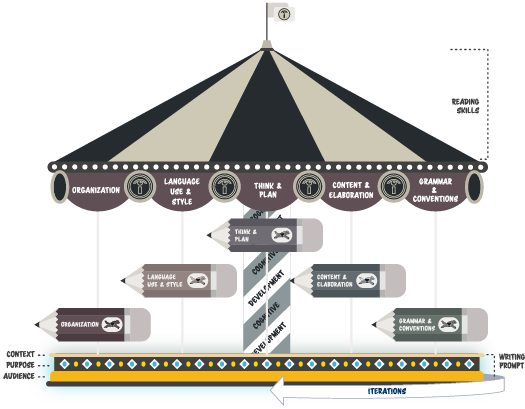
The Platform: Purpose, Audience, and Context
The carousel platform is built on a strong writing prompt that clarifies who you’re writing for, why you’re writing (to describe, inform, persuade, or tell a story), and what you’re writing about. his platform defines the purpose, audience, and context for every piece of writing.
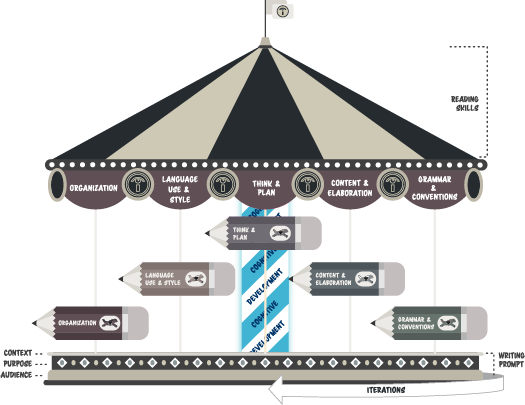
The Center Pole: Cognitive Development
At the heart of the carousel is reflection and metacognition—the self-awareness that allows students to monitor and improve their own writing. Clearly shown in brain studies of writing and in classroom writing strategies, this central operation around which all others rotate represents the executive function that drives skilled writing: setting goals, evaluating progress, and revising purposefully.
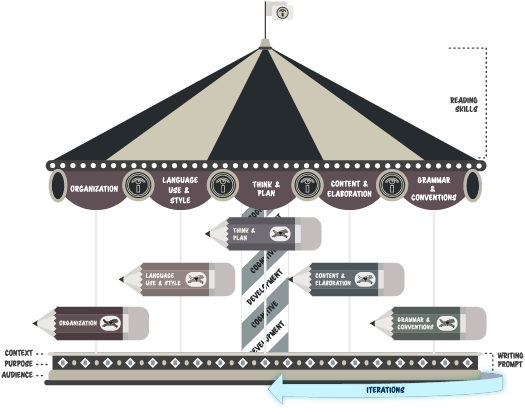
Riding the Carousel: Evidence-Based Practice in Motion
Even experienced writers revisit these domains multiple times, sharpening their focus, strengthening their structure, and elevating their expression with every pass. This repeated cycle of revision, even for the very best writers, is what makes the carousel such a powerful representation of the writing process.
Neuroscience
Recognizing that writing builds cognitive capacity.

The Writing Rope
Showing the interconnected “strands” of skilled writing.
Evidence-Based Pedagogy
Supporting teachers with structured, practical tools.
